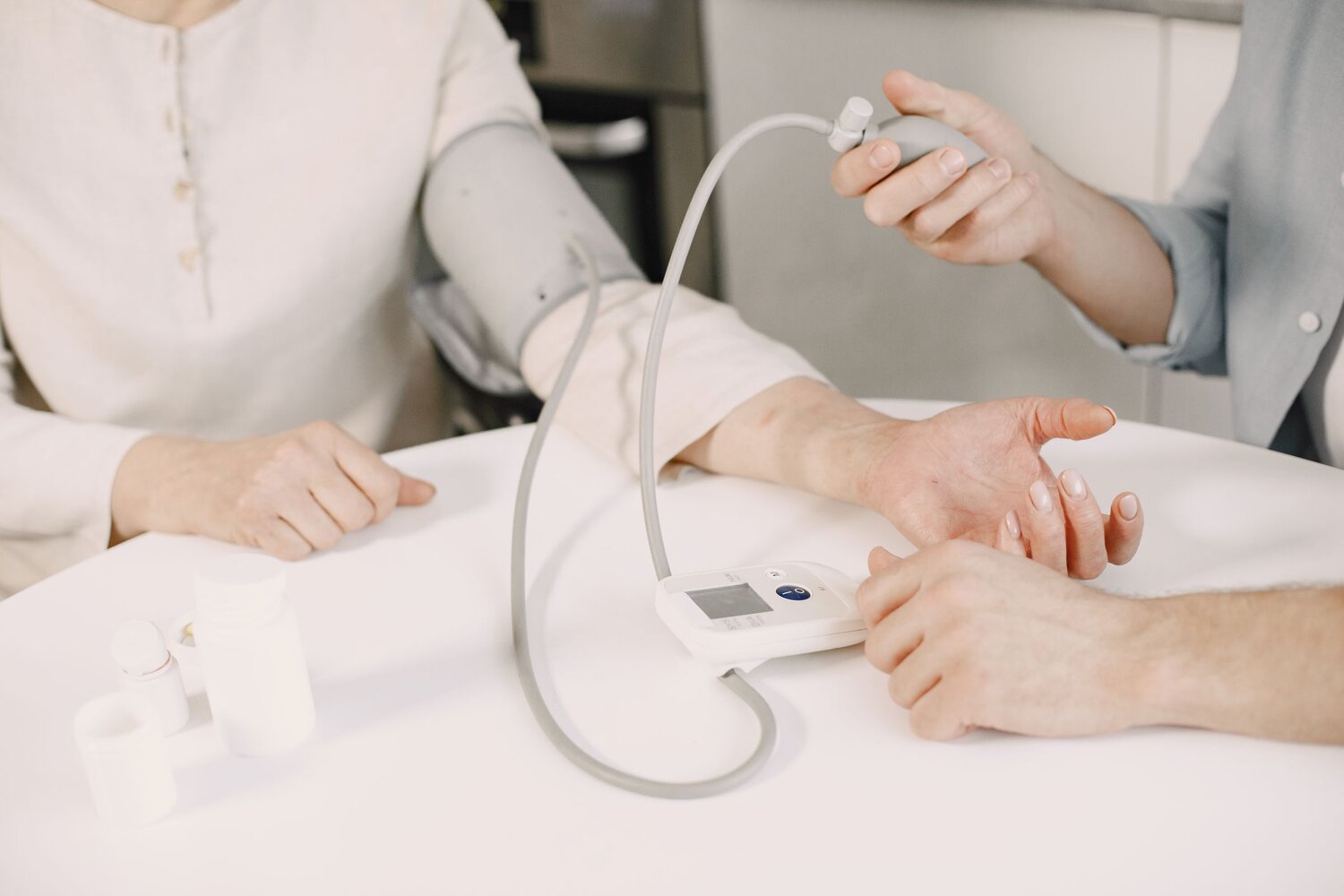
Home care. You care for clients at home, we keep the figures.
For self-employed nurses, certified care workers and home care businesses of up to 25 people. District nursing, Wlz care at home, domestic help and clients with a personal budget: Alvelion handles the accounting around it, from claim to annual accountability report.
Request an introductory meetingWhat does an employee cost in nursing and care? Work it outWhat matters in home care and district nursing?
A home care business gets money from several sides at once. The health insurer pays for district nursing, the care office for Wlz care at home and the municipality for domestic help and support. On top of that there are clients with a personal budget. Each flow of money has its own rules.
At the Chamber of Commerce you are usually registered under SBI code 86942 (nursing and care at home, including district nursing and maternity care) or 88101 (domestic help). If you work as a self-employed nurse mainly in a nursing home or institution, 86943 fits. According to Statistics Netherlands, a self-employed care assistant falls under 88999.
According to Statistics Netherlands, there were 29,300 home care businesses on 1 October 2026, almost a quarter more than in 2021. Almost 95% are one-person businesses. More than 400 have ten or more people. If you grow from freelancer to your own team, you deal with a licence, pay and accountability. That is where we help.

Where things go wrong in home care
Do you recognise one of these situations? Then your accounting needs attention.
-
Care money and private money mixed up
In September 2026 the NZa fined a home care BV €100,000, and the director personally €30,000. Payments to the director could not be traced, and invoices and loan agreements were missing. The law requires you to keep care financially separate from your other activities.
-
Claims that are not paid
Without a valid assessment, decision or referral, or with the wrong service code, a claim is not paid. That money often never comes back. Meanwhile you pay wages and freelancer invoices every month.
-
Freelancers who only work for you
The government says false self-employment occurs in home care. If a freelancer works only for you, at a low rate and without their own substitute, you are at risk. And with one hired care professional you are already an institution that needs a licence.
With your accounting in order, you know per funder what you earn, what is still outstanding and what you need to account for.
Freelancer or your own home care business
Self-employed nurse
Do you provide all the care yourself?
You register with the Care Providers Portal before you start. You do not need a licence as long as you work alone in your sole proprietorship. Your rate has to cover your days off, sickness and pension. As an employee, the employer pays for those under the VVT cao.
Home care business
Does anyone work for you?
If you provide district nursing or Wlz care and one other person works for you, employed or hired, you need an admission licence. An annual accountability report and separate flows of money come with it. A BV, foundation or general partnership also has the PFZW pension.
Employment, freelance or your own business? We work out the difference for you, with the VVT cao and the sole proprietorship or BV calculator.
How Alvelion handles the figures of your home care business
-
Getting to know you and setting up
We look at which funders you work for: health insurer, care office, municipality or personal budget. We set up your accounting accordingly, with care money kept apart from the rest.
-
Keeping up to date
Claims, payments and costs are processed continuously. You see per funder what you have claimed and what is still outstanding.
Every month
-
Payroll and tax returns
Payslips under the cao, the pension return, your tax returns and the annual accountability report in DigiMV by 31 May go out on time.
-
Looking ahead
A first employee, applying for a licence or setting up a BV? We work out in advance what it costs and what it asks of you.
You work with one dedicated contact who knows your business, not a changing team or a general helpdesk.
Where Alvelion helps your home care business
Claims and payments
Keeping track of claims per funder, following up rejections and seeing what is still outstanding.
Go to credit managementStaff on the payroll
Payslips and payroll tax returns for nurses, carers and care assistants, including the pension return.
Go to payroll administrationMoney for the wages
You provide care first and are paid later. A cash flow forecast shows whether you can pay next month's wages.
Go to cash flow forecastVAT and tax
When is your care exempt and when is it not, for example with work through a broker or when lending staff?
Go to tax adviceHiring freelancers
Our own legal team checks whether the arrangement with freelancers matches how the work is really done.
Go to employment lawAnnual accounts and accountability
Your annual accounts and the report in DigiMV, with the lighter rules if you are a micro care provider.
Go to annual accountsCao and calculators
What does an employee cost in home care?
Make an employment contract, look up a salary or write a letter with the VVT cao tools. Work out what a nurse or carer costs you, including pension and holiday pay. Are you a freelancer and is your profit growing? Then compare sole proprietorship and BV with the 2026 rates.
Go to the VVT cao toolsCare money is not private money. We make sure you can account for every euro.
Your home care and your figures with one team
Knows the rules in home care
VAT exemption, the Wtza licence, NZa rates, the annual accountability report and hiring freelancers: we know the rules that apply to home care.
Wages straight into your figures
Payroll and bookkeeping run side by side. That way you see every month what a nurse really costs you.
One contact
Bookkeeping, payroll and advice with the same dedicated team.
Frequently asked questions
You register with the Chamber of Commerce and with the Care Providers Portal before you start. As a nurse you are in the BIG register, as a certified care worker you do not have to be. To be able to claim, you apply for an AGB code from Vektis. According to the Chamber of Commerce, as a nurse you need a quality mark for that. You also arrange a complaints officer and join a recognised disputes body. If you only provide Wmo care, the municipality's requirements apply.
District nursing by a BIG-registered nurse or certified care worker is exempt. Wlz care for a client with an assessment and Wmo help for a client with a decision are also exempt. Domestic work for a private client without an assessment or decision is taxed as normal. If you work through a broker, it depends on your agreement and whom you invoice. A temping agency always charges 21%, even for BIG-registered staff.
Since 1 January 2025, as soon as you provide district nursing or Wlz care and someone else provides care for you, employed or hired. Even if you are a sole proprietor. The application costs €725 and the decision period is in principle eight weeks. If you set up a BV, you get a new Chamber of Commerce number and the BV applies for its own licence. If more than ten care professionals normally work for you, there must also be an internal supervisory body of at least three people.
Then your client receives a reimbursement set by the health insurer itself. It can be lower than your rate. The client pays the difference, or you do not get it. You may never charge more than the NZa maximum rate. For nursing that is €97.50 an hour in 2026 and €100.98 in 2027. With a contract, your rate is in the agreements with the insurer.
You can, but put it in writing. The law requires you to keep care financially separate from your other activities, set out the financial responsibilities on paper and be able to trace every payment to its source and destination. Without a loan agreement and invoices you are at risk. In 2026 the NZa fined a home care BV €100,000 for this and the director personally €30,000.
At all the circumstances together. In a case from August 2026, a self-employed care worker worked for €45 an hour through a broker in disability care. The court found no employment: he could send a substitute, had other clients and his rate was well above the cao wage. That he did the same work as employees was no proof. From 31 December 2026 a legal presumption of employment also applies at a low hourly rate.
Home care is covered by the VVT cao, including a small home care business that makes a profit. The previous cao was generally binding until 31 August 2026. No decision has yet been published for the new cao. If you are a member of ActiZ or Zorgthuisnl, the cao applies to you. For pensions, PFZW is compulsory for a BV, foundation or general partnership that receives money from the government or health insurance. If you have a sole proprietorship with staff, have it checked by PFZW.
Yes, as soon as you have staff or outsource care, even to one locum. You file the report by 31 May through DigiMV. A small provider meeting at least two of three criteria, a balance sheet total up to €450,000, turnover up to €900,000 and fewer than 10 FTE on the payroll, falls under the lighter regime. In April 2026 the NZa imposed penalty payments on nine district nursing providers because financial data was missing.
Then the client is your principal. The legal presumption of employment does not apply to a private individual. Employment can still arise, especially with simple work such as help in the household. With medical tasks, self-employment is more likely. According to the Chamber of Commerce, with a personal budget or Wlz care you are paid for a maximum of forty hours a week.
Knowledge for your trade
All articles on home careReady to grow your home care business further?
Tell us how your business runs now. We deliberately work with a limited number of clients. That is why we first look together at whether we are a good fit. You'll hear back within one working day.
Request an introductory meeting