Allied health practices. You treat patients, we handle the figures around it.
For physiotherapists, exercise therapists, speech therapists, dietitians and occupational therapists, from sole practitioner to a practice with 25 people. Treatments without VAT, training with VAT, contracts with health insurers and staff: Alvelion handles the accounting around it.
Request an introductory meetingSole proprietorship or BV? Work it outWhat matters in an allied health practice?
An allied health practice claims from health insurers and sends invoices to patients. One service is exempt from VAT, another is not. And since 2025, a practice with staff often needs a licence.
At the Chamber of Commerce, a physiotherapist or occupational therapist is registered under SBI code 86.95.0. Speech therapists, dietitians, podiatrists and skin therapists are under 86.99.4, exercise therapists under 86.96.0.
According to Statistics Netherlands, there were more than 10,000 physiotherapy businesses on 1 October 2026. Two in three are one-person businesses, more than 3,000 practices have 2 to 20 people. The number of legal entities, such as the practice BV, rose by 17% in a year. If you grow, you deal with staff, a licence and the choice of a BV. That is where we help.
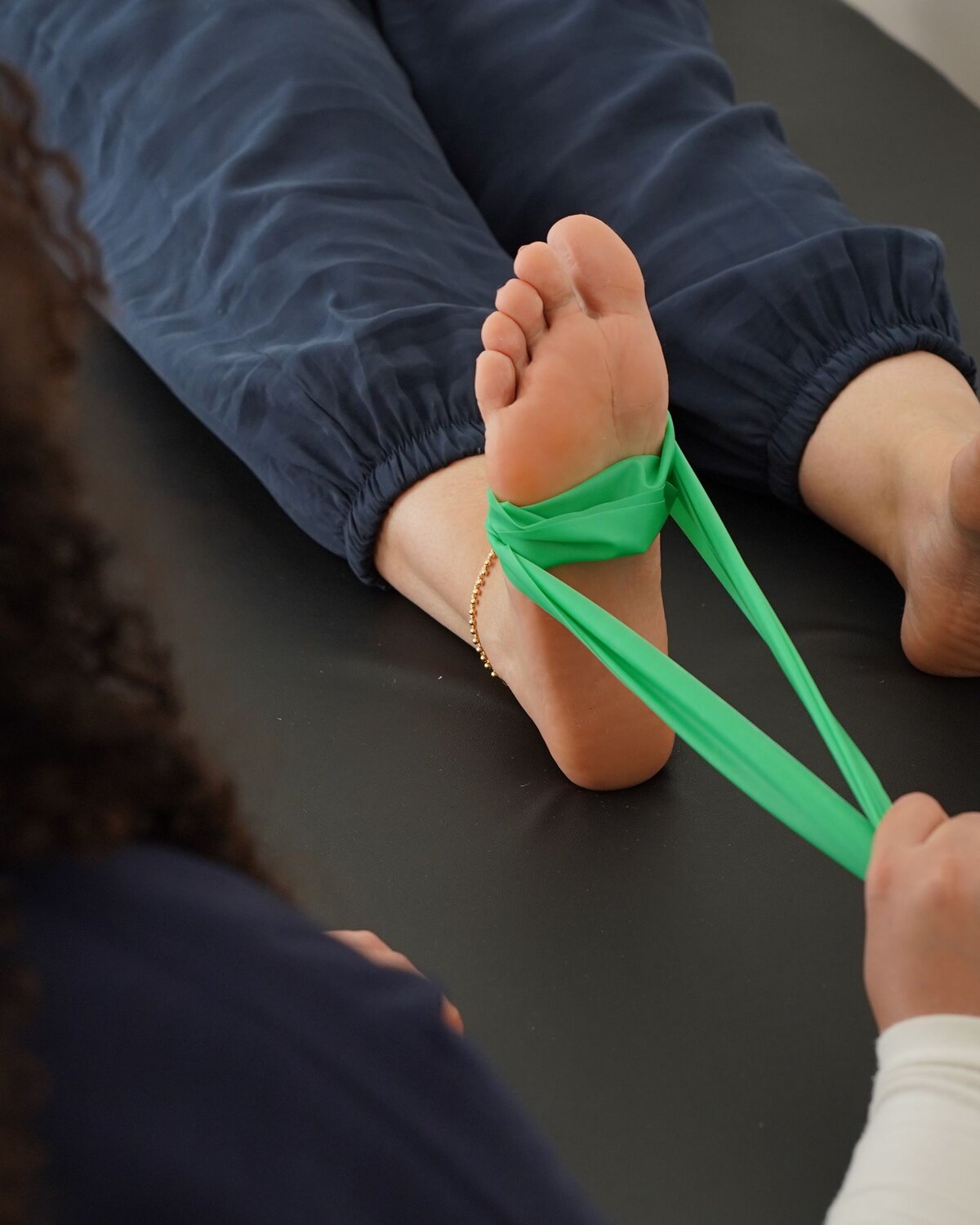
Where things go wrong in allied health practices
Do you recognise one of these situations? Then your accounting needs attention.
-
Group training without VAT
According to the Tax Administration, fall prevention in a group has no therapeutic purpose. Then you charge 21% VAT. The same applies to a group class in which not everyone is treated for their own condition. Medical fitness is often subject to VAT as well.
-
A practice BV without a licence
If you move from sole proprietorship to BV, you get a new Chamber of Commerce number. Under the Wtza you are then a new care provider. If the BV has staff and you provide care covered by basic health insurance, the BV itself needs a licence.
-
One locum, still annual reporting
Did a colleague stand in for you during illness or holiday? Then you must submit annual reporting in DigiMV by 31 May. How often or how long the locum worked makes no difference.
With your accounting in order, you know what each treatment brings in, which part of your revenue carries VAT and what you set aside for tax.
Sole proprietorship or practice BV
Sole proprietorship
What does running a business give you?
Your profit falls under income tax, with the self-employed deduction (€1,200 in 2026) and the SME profit exemption. If you work alone, you do not need a Wtza licence. You do have to register as a care provider.
Practice BV
When does a BV pay off?
The BV pays corporate income tax. The healthcare exemption does not work for a practice owned by the care providers themselves. The BV gets a new Chamber of Commerce number, often its own licence and its own annual reporting. With a lower profit, a BV brings little benefit.
With or without a contract with the health insurer is a second choice. Without a contract, the insurer decides what the patient gets back. More payment risk then lies with the patient, and so with you. We work out both choices with your own figures.
How Alvelion handles the figures of your practice
-
Getting to know you and setting up
We look at the care you provide, what else you sell and which insurers you work with. We set up your accounting accordingly, with exempt and taxable revenue kept separate.
-
Keeping up to date
Claims, invoices to patients, purchases and bank are processed continuously. Every month you see what has come in and what is still outstanding with insurers and patients.
Every month
-
Payroll and tax returns
Your therapists' and reception staff's payslips, the VAT return for the taxable part and your income tax or corporate income tax return go out on time.
-
Looking ahead
A first therapist on the payroll, taking over a practice or setting up a BV? We work out in advance what it costs and brings in, and which licence you need.
You work with one dedicated contact who knows your practice, not a changing team or a general helpdesk.
Where Alvelion helps your practice
Claims and invoices in the books
Claims to insurers, invoices to patients and your purchases are processed continuously, with exempt and taxable revenue kept separate.
Go to online bookkeepingStaff on the payroll
Payslips and payroll tax returns for therapists and reception staff. There is no cao for physiotherapy yet. Employers and unions are negotiating, we keep track of it.
Go to payroll administrationAnnual accounts and annual reporting
Your annual accounts and the financial statement for DigiMV, in time for 31 May. As a small practice, often without an auditor's report.
Go to annual accountsTaking over a practice
For tax purposes you write off goodwill over at least ten years. We work out in advance what the takeover costs, how you pay for it and what the practice brings in.
Go to acquisitions and business transferVAT in a mixed practice
Do you sell training or products alongside treatments? Then you charge VAT on those and split the VAT on shared costs, such as rent and software.
Go to tax adviceBV, partnership or cooperation
From sole proprietorship to BV, a partnership with colleagues or a cost-sharing partnership in a health centre. We set up the structure properly, with the licence in mind.
Go to structure and controlCalculators
Sole proprietorship or practice BV?
Is your practice growing? Enter your expected profit and see what you keep net as a sole proprietorship and as a BV, with the 2026 rates. Already have a BV? Work out what salary the Tax Administration expects from you. There is no cao for allied health professionals, so you calculate the cost of an employee with the statutory rules.
Calculate sole proprietorship or BVThe same room, the same therapist. Yet one class is exempt from VAT and the other is not.
Your practice and your figures with one team
Knows the rules in healthcare
VAT exemption, Wtza, annual reporting and the SPF pension: we know the rules that apply to allied health practices.
Wages straight into your figures
Payroll and bookkeeping run side by side. That way you see every month what an employed therapist really costs you.
One contact
Bookkeeping, payroll and advice with the same dedicated team.
Frequently asked questions
Usually yes. Care with a therapeutic purpose, given personally to the individual patient, is exempt. The Tax Administration names fall prevention in a group as an example of a taxable service. A group treatment is only exempt if everyone in the group is treated for their own condition. If you charge VAT on part of your revenue, you record taxable and exempt revenue separately and file VAT returns.
As a physiotherapist, yes. The Tax Administration puts it this way: if you are not entered in the BIG register, you cannot apply the exemption. For professions regulated by the BIG Act without a registration requirement, the exemption applies if you have the right diploma and the service belongs to your profession. If your profession is not covered by the BIG Act, you must show an equivalent qualification, for example a 240-credit bachelor's degree aimed at your profession.
The BV gets a new Chamber of Commerce number and is therefore a new care provider. If the BV works with staff or hired care providers and you provide care covered by basic health insurance, the BV needs a Wtza licence. The application costs €725 and the decision period is in principle 8 weeks. The BV also submits its own annual reporting and pays corporate income tax. So start in good time.
Not if you provide all the care yourself. If you had staff or a locum stood in for you, even once, then you do. You then submit through DigiMV by 31 May. A small practice is often a micro care provider: two years in a row at least two of three, a balance sheet total up to €450,000, revenue up to €900,000 and fewer than 10 FTE on the payroll. The reporting is then lighter, without a management report and without an auditor's report.
At the moment there is no cao, and there has not been one for more than twenty years. The unions and the Physiotherapy Employers' Association are negotiating a first cao for primary care physiotherapy. CNV wants it to apply to support staff and other allied health professionals employed by a physiotherapy practice as well. Until there is a cao, the statutory rules and what you agree yourself apply to your staff.
If you work as a physiotherapist in primary care, you take part in the SPF pension fund scheme on a compulsory basis. For other staff it is different. An employer that only provides physiotherapy, speech therapy, dietetics or occupational therapy falls outside the PFZW compulsory scheme. For those staff there is then no compulsory pension fund. Have this checked before you hire someone.
Free tariffs apply to allied health care. The NZa does not set tariffs. Without a contract, the patient gets a reimbursement that the insurer decides itself and describes in its policy. Usually that is less than your rate. Adults often pay for the first 20 physiotherapy treatments for a chronic condition themselves or from supplementary insurance. You then invoice patients directly more often, and that calls for good debtor management.
If you pay goodwill, you write it off for tax purposes at no more than 10% a year. So that is at least ten years. For the seller, the goodwill is a profit on discontinuation. A discontinuation deduction of €3,630 may apply to it. Work out in advance whether the practice leaves enough for your own income after interest and repayments.
Ready to grow your practice further?
Tell us how your practice runs now. We deliberately work with a limited number of clients. That is why we first look together at whether we are a good fit. You'll hear back within one working day.
Request an introductory meeting