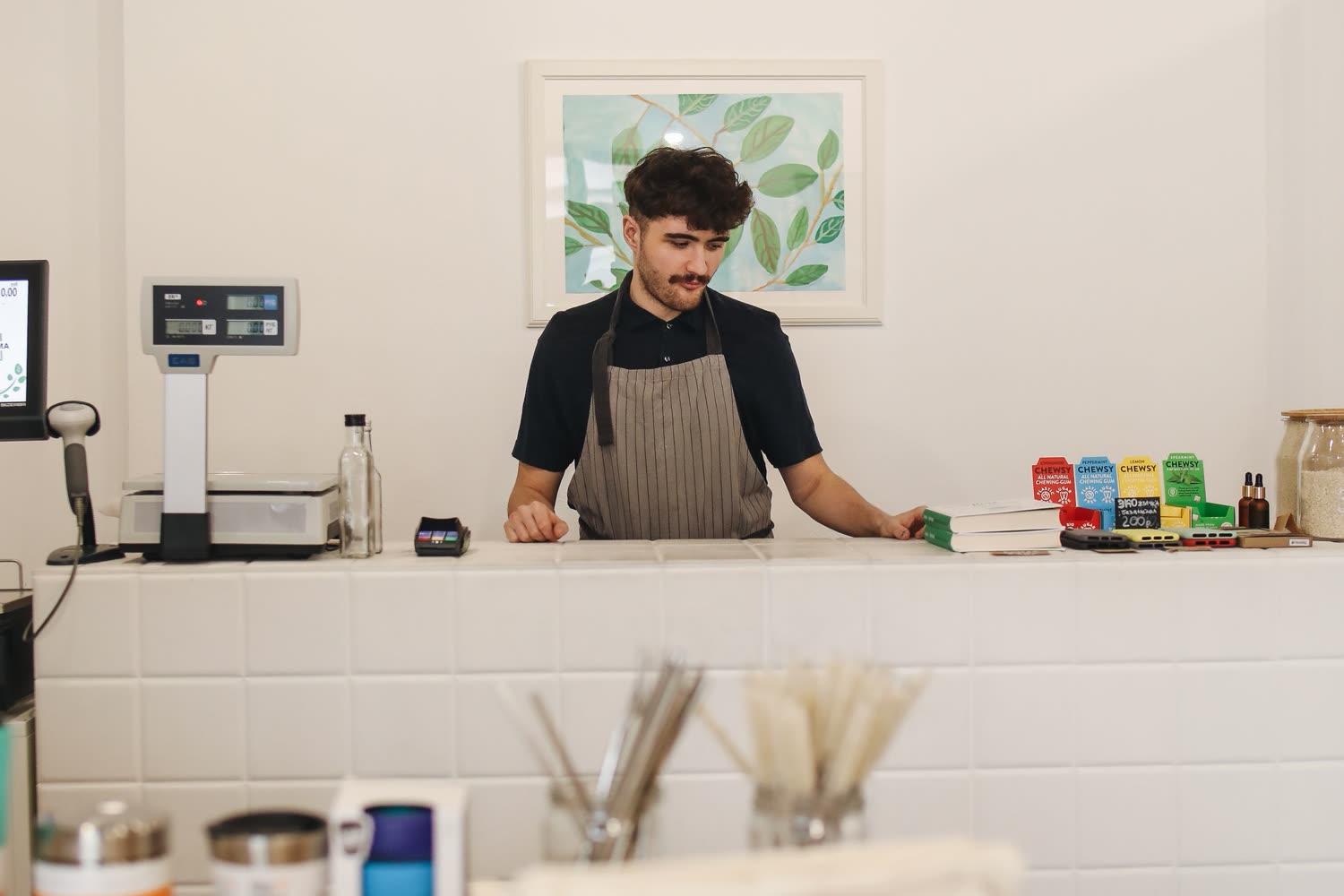
Retail. Your shop runs, your figures add up.
For shops and online stores that are growing, from 1 to 25 people. 9% and 21% VAT on one receipt, the till, stock, cash and staff under a cao: Alvelion handles the accounting around it.
Request an introductory meetingJust started? Read this firstWhat does retail cover?
Businesses that sell to consumers, in a shop, online or both. From baker to furniture store.
We follow the classification of Statistics Netherlands (CBS): SBI 2025, division 47, retail trade. Since SBI 2025, an online store no longer has its own code. It gets the code for what the shop sells, just like a regular shop.
We have covered five parts in detail: online stores, fashion and footwear, bakers and butchers, supermarkets and food shops, and home furnishings. Do you have another kind of shop, such as a bookshop or a bicycle shop? Much of what is here applies to you too.
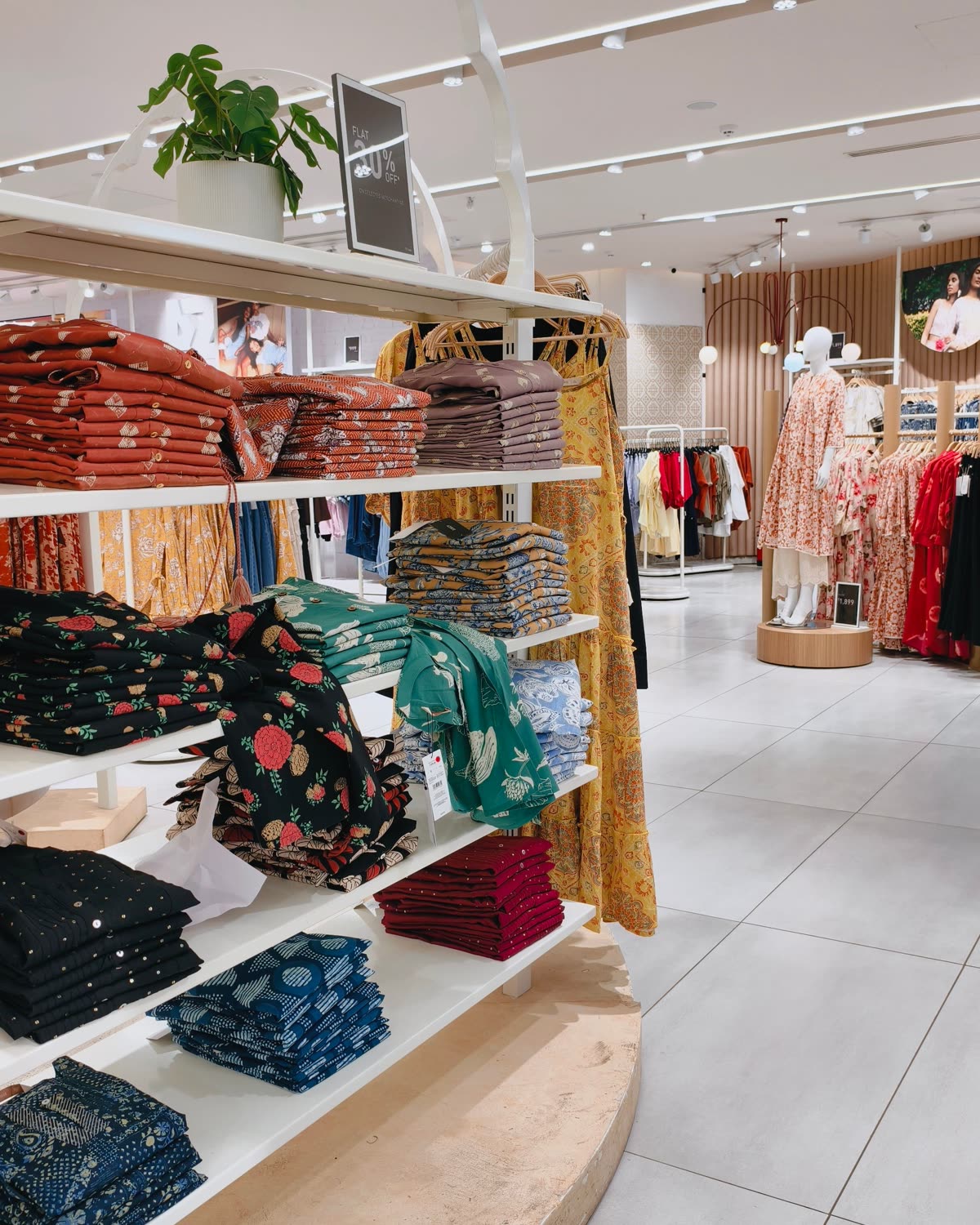
Where things go wrong in the shop
Do you recognise one of these situations? Then your accounting needs attention.
-
Two rates on one receipt
Food, non-alcoholic drinks, books and flowers have 9% VAT. Almost everything else 21%. If one item is set up wrongly in the till, every VAT return after that is wrong too.
-
A till that doesn't balance
Your till is part of your accounting records. Every receipt, correction and opened drawer must be traceable for 7 years. A cash difference that nobody can explain stands out in an audit.
-
Cash
Since 1 January 2026, a shop may not accept €3,000 or more in cash. Not in instalments either, such as a deposit and the rest on delivery.
With your accounting in order, you know per day what was in the till, per rate what you pay over and what is left after rent and staff.
The shop adds up, and so does the online store
The shop
Does the till balance at the end of the day?
Till, card payments, cash and stock match up with your bookkeeping, with turnover per VAT rate.
The online store
What is left per order?
Orders, platform payouts, returns and payment costs are kept separate, with the right VAT.
How Alvelion handles the figures of your shop
-
Getting to know you and setting up
We look at what you sell, where and with which people. We set up your accounting, VAT codes and the link with your till accordingly.
-
Keeping up to date
Till, card payments, purchases and bank are processed continuously. Turnover at 9% and 21% is each recorded correctly.
Every month
-
Payroll and tax returns
Payslips, payroll tax returns and VAT returns go out on time.
-
Looking ahead
A second shop, an online store on top or more staff? We work out in advance what it means.
You work with one dedicated contact who knows your business, not a changing team or a general helpdesk.
The sectors within retail
Online stores and e-commerce
Foreign VAT above €10,000 to customers in the EU, Bol and Amazon in your bookkeeping, returns and the new rules for your online store.
Go to online storesFashion and footwear
Stock that goes out of fashion, buying for the next season, tax free for tourists and the Retail Non-Food cao.
Go to fashion and footwearBakers and butchers
9% VAT, even when the customer eats on the premises, the cost price per product, early shifts and the cao for your first employee.
Go to bakers and butchersSupermarkets and food shops
Deposits on bottles, franchising, school pupils in the shop, the rules for alcohol and tobacco and a cao that has expired.
Go to supermarketsHome furnishings
Deposits of up to half the price, delivery and fitting, stock in the showroom and the Retail Non-Food cao with its home furnishings module.
Go to home furnishingsJust started?
Just started with a shop or an online store? Read what to arrange first.
Go to startersStaff on the payroll
The cao for your shop
Hiring a sales assistant, cashier or store manager? Choose the cao that fits your shop. You get an employment contract with the right wage, probation, notice period and chain rule. With the wage table, job grading, staff letters and what an employee costs you.
Make an employment contractChoose your cao
- Fashion, footwear, sports and other non-food (Retail Non-Food cao)
- Home furnishings (Retail Non-Food cao, home furnishings module)
- Independent supermarkets (Food Retail cao)
- Independent drugstores (KNDB cao)
- Butcher's shops (Butchers cao)
- Bakeries (Craft Bakeries cao)
- What does an employee cost? All cao's
What the till doesn't record today, you can't explain tomorrow.
Your shop and your figures with one team
Knows the rules in retail
9% and 21% VAT, gift cards, the ban on cash from €3,000, the Retail Non-Food cao and the rules for school pupils: we know the rules that apply to shops.
Wages straight into your figures
Payroll and bookkeeping run side by side. That way you see what a sales assistant or a school pupil really costs per hour.
One contact
Bookkeeping, payroll and advice with the same dedicated team.
“A pleasant accounting firm, always helped in a friendly way and everything is arranged neatly.”
Mike M., October 2026 (translated from Dutch)
“Up and running quickly, and clear replies.”
Erik, October 2026 (translated from Dutch)
Frequently asked questions
Food and non-alcoholic drinks have 9% VAT, even when the customer eats or drinks them on the premises. Books and real flowers and plants too. Alcohol and almost everything else have 21%. Each item on the receipt keeps its own rate and the till splits the turnover. Do you sell a package for one price, such as a gift basket with wine and chocolate? Then you divide the price according to the normal prices of the parts. If you don't, you pay 21% on the whole amount.
That depends on what the customer can buy with it. If only items at one rate, you pay the VAT when you sell the card. If the customer can buy both 9% and 21% items with it, you only pay the VAT when the card is redeemed. A discount voucher is different: there you pay VAT on the amount the customer pays on top at the next purchase.
The till is part of your accounting records. Every transaction must be kept, with continuous numbering. The till also records corrections, opening the drawer without a sale and changes to prices or VAT rates. You keep that data for 7 years. A paper roll is not enough. Make a daily cash report every day: turnover according to the till, card payments, cash, the counted cash and the difference. That way you can show every day that the till balances.
Up to and including €2,999.99, yes. Since 1 January 2026, a shop may not accept €3,000 or more in cash, not even in instalments. The fine has a base amount of €10,000. You may still refuse cash for now, if you make that clear in advance and the customer can pay another way. An obligation to accept cash up to €3,000 is coming. The aim is for it to apply from 2027. The date has not been set yet (as of October 2026).
The municipality decides whether shops may open on Sundays. You are not obliged to open. Your landlord or retailers' association cannot simply change the opening hours without your consent. An employee only works on Sunday if that has been agreed in the employment contract or if the employee agrees to it. Every 52 weeks, the employee is entitled to at least 13 Sundays off, unless the cao says otherwise.
Yes, with rules per age. At 13 and 14, only light work such as stacking shelves, not on school days. At 15, also stacking shelves, but not at the till, with at most 2 hours per school day and 12 hours per school week, between 7.00 and 19.00. From 16, almost anything is allowed, including the till, but no night work and no overtime. The minimum wage for a 16-year-old is €5.17 an hour (from 1 July 2026). Many retail cao's pay more.
That depends on what you sell. Fashion, footwear, sports and most other non-food, including online stores, fall under the Retail Non-Food cao. It has not yet been declared generally binding, but a pension with Pensioenfonds Detailhandel is compulsory. Furniture and home stores fall under the same cao, with the home furnishings module. The Food Retail cao and the Craft Bakeries cao have expired, and a new one is being negotiated. The Butchers cao and the Drugstores cao are generally binding. We find out what applies to your shop (as of October 2026).
A shop lease normally runs for 5 years and is then automatically extended by 5 years. With a contract of 2 years or less, you have no rent protection. Notice is given by registered letter or through a bailiff, with a notice period of at least a year. The landlord must give the reason. In between, the rent only goes up as stated in the contract. When the term ends, you can ask the court to compare the rent with similar premises in the area.
We mainly work for shops and online stores that are growing. Have you just started? On our page for starters you read what to arrange in your first year.
Further reading
All articlesReady to grow your shop further?
Tell us how your business runs now. We deliberately work with a limited number of clients. That is why we first look together at whether we are a good fit. You'll hear back within one working day.
Request an introductory meeting